
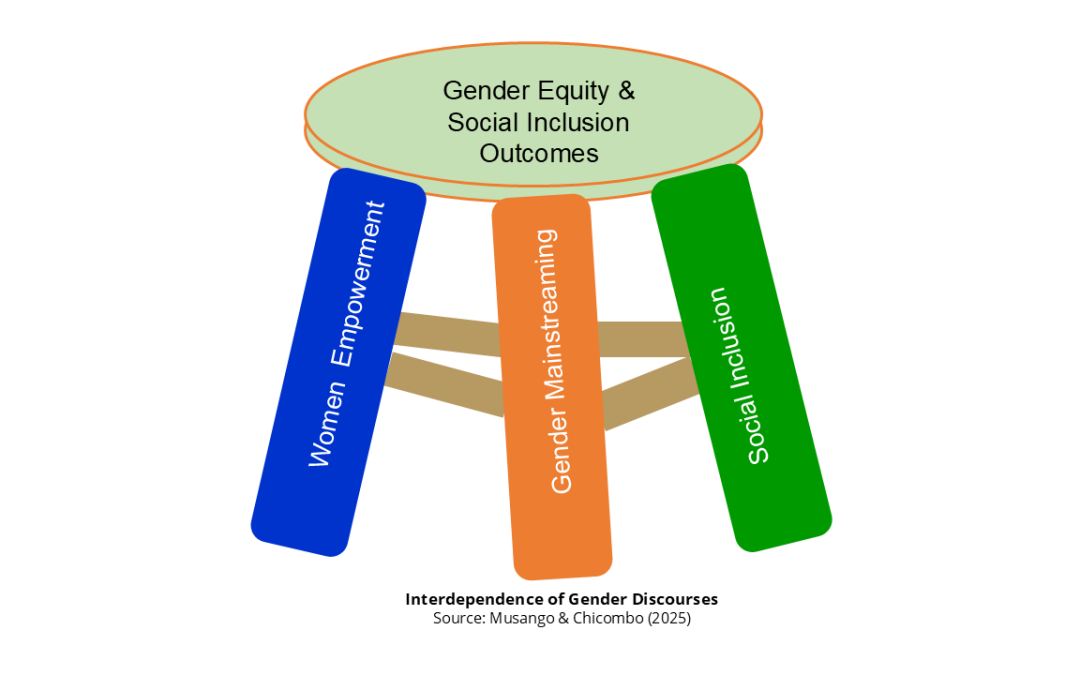
As Africa pushes forward on its journey toward clean, affordable, and sustainable energy, a critical question emerges: Are Africa’s energy policies truly inclusive? A recent systematic review1 of 46 energy frameworks from 18 sub-Saharan African countries reveals that, while gender mainstreaming is increasingly mentioned, most policies still fall short of transformative change. Too often, “gender” is equated with simply increasing women’s participation, without clear, measurable indicators to track progress or address the diverse needs of all population groups—including youth, men, and urban communities.
Key Gaps in Current Energy Frameworks
The study1 highlights three major gaps: a narrow conceptualization of gender mainstreaming, a lack of tangible indicators and outcomes, and the frequent omission of social inclusion. For example, most frameworks focus on “fixing the numbers” (counting women’s involvement) or “fixing the institutions” (policy reforms), but rarely on “fixing the knowledge”—understanding and addressing the unique energy needs and contributions of different groups. Social inclusion, which considers intersectional factors like age, income, and disability, is often missing, despite its importance for just and equitable energy transitions.
What Needs to Change?
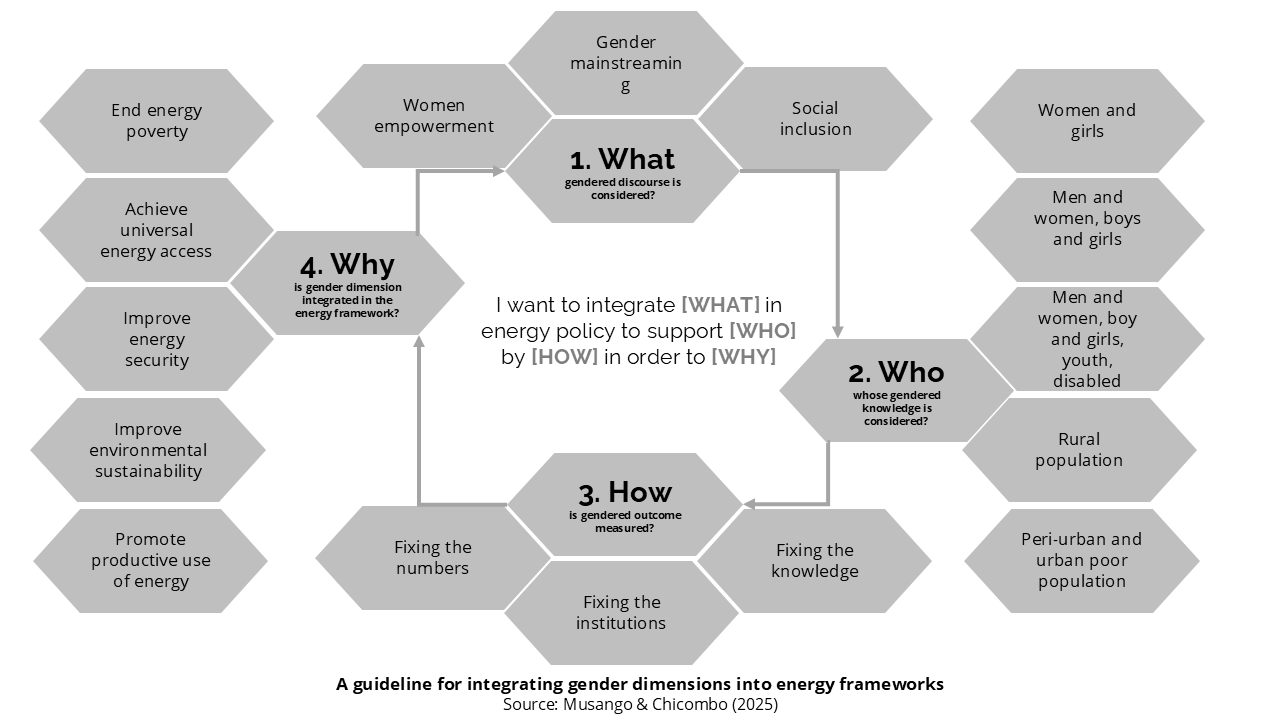
To make energy transitions truly inclusive, the study1 propose a practical guideline for policymakers, researchers, and practitioners. First, clarify which gender discourse is being addressed—women empowerment, gender mainstreaming, or social inclusion. Second, specify whose knowledge and needs are considered, ensuring that policies reflect the realities of women, men, youth, and marginalized groups. Third, develop and use clear, gender-disaggregated indicators to measure outcomes. Finally, align the purpose of gender integration with broader goals like poverty reduction and universal energy access.
The Path Forward
Africa’s energy transition must move beyond tokenistic inclusion. By embedding measurable, equitable, and socially inclusive strategies into energy frameworks, we can ensure that the benefits of clean energy reach everyone—fueling not just economic growth, but also social justice and sustainable development.